
Periodontal Therapy North York
Gum disease, also known as periodontal disease, is an infection and inflammation of the tissues that support your teeth, including the gums, periodontal ligaments, and surrounding bone. It can range from gingivitis, an early stage that affects the gums, to periodontitis, a more advanced condition that can damage the bone supporting your teeth.
Gum disease is a common cause of tooth loss in adults. Because it can develop gradually without causing noticeable pain, regular dental examinations are important for identifying changes in your gum health before more extensive damage occurs. Learn more about gum disease from the CDC.
Gum inflammation is also common among Canadian adults. According to Statistics Canada's 2022–2024 Canadian Health Measures Survey, 83% of Canadians aged 20 to 79 had bleeding gums around at least one tooth during a dental examination. Bleeding gums can be an early warning sign that your gums need attention. Read the Statistics Canada findings.
What Are the Signs and Symptoms of Gum Disease?
Gum disease does not always cause obvious symptoms in its early stages. As inflammation progresses, you may notice changes in the appearance of your gums or how your teeth feel. Common signs of gum disease include:
- Red, swollen, or tender gums
- Bleeding when brushing or flossing
- Persistent bad breath or an unpleasant taste in your mouth
- Gum recession that makes your teeth appear longer
- Increased tooth sensitivity, particularly near the roots
- Changes in the position of your teeth or gaps developing between them
- Loose teeth in more advanced cases
These symptoms can have different causes, so a dental examination is needed to determine whether you have gingivitis, periodontitis, gum recession, or another condition. If you notice persistent bleeding, swelling, or changes in your gum line, arrange an assessment with your dentist.
What Causes Gum Disease?
Gum disease commonly develops when plaque, a sticky film of bacteria, accumulates around the teeth and along the gum line. If plaque is not removed effectively, it can harden into tartar, which cannot be removed through regular brushing and flossing alone. The resulting bacterial buildup can irritate the gums and contribute to periodontal damage.
Several factors can increase your risk of gum disease or gum recession, including:
- Inadequate brushing and flossing
- Smoking or other tobacco use
- Genetic factors that influence gum health
- Hormonal changes that affect the gums
- Diabetes and certain other health conditions
- Teeth grinding or clenching
- Crooked teeth or a misaligned bite that makes cleaning more difficult
- Overly aggressive brushing or other mechanical irritation
- Lip or tongue piercings that repeatedly rub against gum tissue
Gum recession does not always mean you have periodontal disease. However, gum disease can contribute to the loss of gum tissue and supporting bone. Identifying the underlying cause is an important step in choosing appropriate treatment.
Gum Disease Treatment in North York
The right treatment for gum disease depends on its severity, the amount of supporting tissue affected, and your overall oral health. Early intervention can help control inflammation and reduce the risk of further damage.
Professional Dental Cleaning
Professional dental cleanings remove plaque and tartar from areas that are difficult to reach with a toothbrush and floss. Regular cleanings, combined with effective home care, help maintain healthy gums and reduce the risk of periodontal disease.
Scaling and Root Planing
If gum disease has progressed below the gum line, your dentist may recommend scaling and root planing, often called a deep cleaning. This procedure removes plaque, tartar, and bacterial deposits from the tooth roots and smooths the root surfaces to support gum healing.
More advanced periodontal disease may require additional treatment or a referral to a periodontist. The recommended approach depends on the condition of your gums, the amount of bone loss, and how your tissues respond to initial treatment.
Receding Gums and Exposed Tooth Roots
Gum recession occurs when the gum tissue pulls away from a tooth, exposing part of its root. This can make teeth appear longer and increase sensitivity to cold, heat, or touch. Exposed roots may also be more vulnerable to root decay and can make cleaning certain areas more difficult.
Gum recession can be associated with periodontal disease, aggressive brushing, thin gum tissue, tooth position, or other contributing factors. Treatment depends on the cause and the extent of recession. In some cases, improving brushing technique and controlling inflammation may be sufficient. In others, gum grafting may be considered to cover exposed roots or improve the thickness and position of the gum tissue.
Before recommending gum grafting, your dentist will assess your gum health and determine whether active periodontal disease needs to be treated first. Addressing the underlying cause of recession is important for maintaining the results of treatment.
AlloDerm® Gum Grafting at Stonebrook Dental
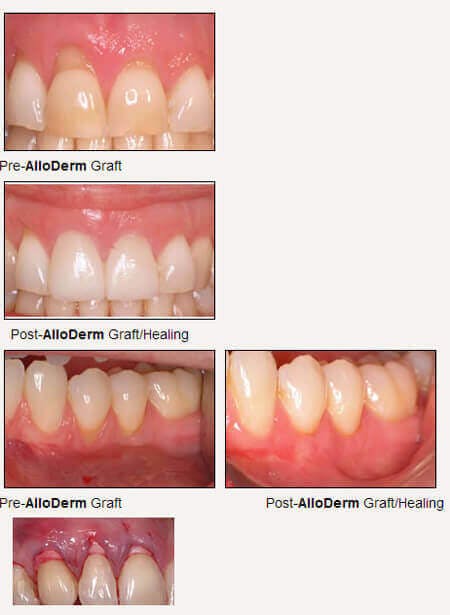
AlloDerm® is a processed, donated human tissue graft material that can be used in certain gum grafting procedures. It provides a collagen-based framework that can support healing and integration with the surrounding tissue. Your dentist can assess whether this material is suitable for treating your gum recession.
Traditional gum grafting often involves taking a small amount of tissue from the roof of the mouth. With AlloDerm®, a separate tissue-harvesting procedure may not be necessary. For suitable patients, this can avoid creating a second surgical site and may simplify recovery.
AlloDerm® is not appropriate for every case of gum recession, and results depend on factors such as the location and severity of the recession, the condition of the surrounding gums, and the treatment technique. A consultation can help determine whether this approach is appropriate for your needs.
How Can AlloDerm® Gum Grafting Help?
Depending on your individual circumstances, gum grafting with AlloDerm® may help:
- Cover some areas of exposed tooth roots
- Reduce sensitivity associated with exposed roots
- Improve the appearance of an uneven or receding gum line
- Increase the thickness of gum tissue in selected areas
- Support the protection of vulnerable root surfaces
The degree of root coverage and the expected outcome vary from patient to patient. Your dentist will explain the likely benefits, limitations, and alternatives before treatment.
AlloDerm® Gum Grafting at Stonebrook Dental
Dr. Nubia Diaz provides dental care for patients experiencing gum recession at Stonebrook Dental in North York. Dr. Diaz has received training from Dr. Edward P. Allen, an American periodontist known for teaching clinical techniques in oral plastic surgery and soft-tissue grafting, including the use of AlloDerm®.
During a consultation, Dr. Diaz can examine your gums, discuss the cause of your recession, and explain whether AlloDerm® gum grafting or another treatment may be suitable for you.
What to Expect During AlloDerm® Gum Grafting
The gum grafting process begins with an examination of your gum tissue and the exposed root surfaces. Your dentist will review your medical and dental history, explain the proposed procedure, and provide instructions to prepare for treatment.
During the procedure, the graft material is positioned at the treatment site using a technique selected for your clinical needs. The surrounding gum tissue may be positioned over the graft, and sutures may be used to stabilize the area while it heals.
The exact technique depends on the location of the recession, the amount of available gum tissue, and the desired outcome. Your dentist will explain the steps involved before beginning treatment.
AlloDerm® Gum Grafting Recovery and Aftercare
Recovery following gum grafting varies depending on the treatment site, the surgical technique, and your individual healing response. Your dental team will provide specific instructions to help protect the graft and support healing.
After treatment, you may experience some swelling, tenderness, or discomfort. Follow your dentist's instructions regarding prescribed medication, cold compresses, and other recommended measures for managing these symptoms.
To help protect the treated area during recovery:
- Rest and limit strenuous activity during the initial recovery period.
- Avoid brushing, flossing, or putting pressure directly on the graft site until your dentist advises that it is safe.
- Follow instructions for any prescribed mouth rinse or medication.
- Choose foods that will not irritate or disturb the treated area, as directed by your dental team.
- Avoid smoking and tobacco use, which can interfere with healing.
- Attend follow-up appointments so your dentist can monitor healing and assess the graft.
Do not assume that you can resume vigorous exercise or normal cleaning around the surgical site after a fixed number of days. Your dentist will advise you based on how the area is healing and the procedure performed.
Protect Your Gum Health at Stonebrook Dental
Healthy gums help support your natural teeth and protect the structures beneath them. Regular dental examinations, professional cleanings, and effective daily oral hygiene can help identify gum problems early. If you have persistent bleeding, gum recession, tooth sensitivity, or concerns about periodontal disease, a dental assessment can help you understand your options.
Stonebrook Dental provides dental care for patients in North York, including assessment of gum disease and receding gums. Contact our team to discuss your concerns and find out whether periodontal treatment or AlloDerm® gum grafting may be appropriate for you.
Call 416-636-4227 or request an appointment to arrange a consultation.
Book Online
Stonebrook Dental offers the ability to request your dentist appointments online. Schedule an appointment now!
Book Online